Setting the mission under its management philosophy as: “We help society evolve by leveraging information and technology to create and deliver new value and services,” Restar Corporation (the Company) aims to be "Electronics Value Platformer" that accommodates all manner of stakeholder needs. Our basic sustainability policy is to contribute to the sustainable development of society by engaging in businesses that solve various social issues through information and technology.
While generating synergies among our various businesses, we will contribute to the creation of a more prosperous and sustainable global environment by addressing regional development initiatives and helping to solve global environmental issues such as energy and food problems. To realize these goals, our employees will base its activities on the “Code of Conduct” and work together with our business partners in resolving issues to further enhance the relationship of trust with our stakeholders and strive for the development of a sustainable society.
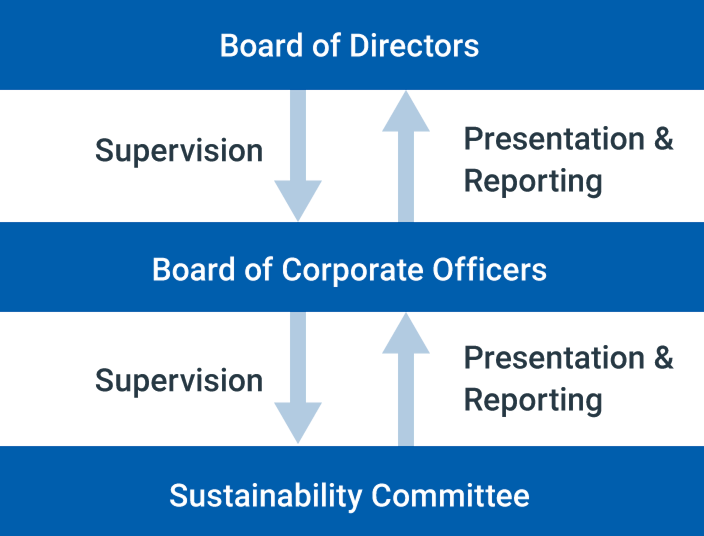
As shown below, we have established a Sustainability Committee in collaboration with the Board of Directors and the Board of Corporate Officers. The committee monitors the overall progress on sustainability, including the progress of materiality initiatives related to each business, human capital policy planning by the Human Resources Committee, and the setting and monitoring of GHG emissions targets by the Environmental Promotion Committee, and identifies issues as well as shares information and formulates policies on a regular basis.
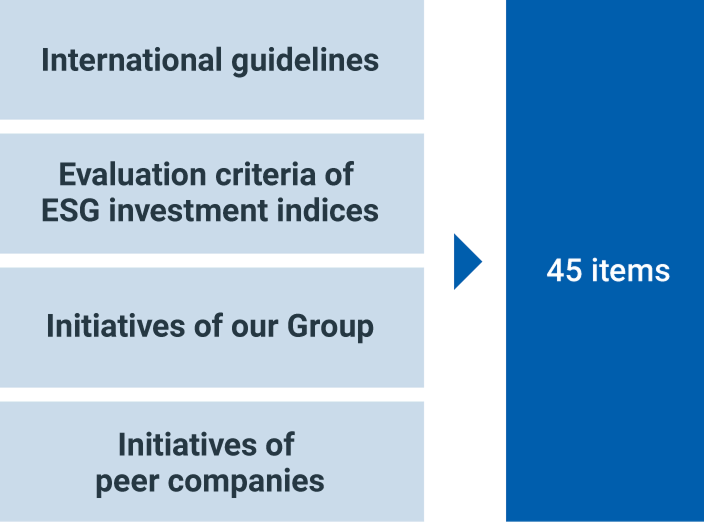
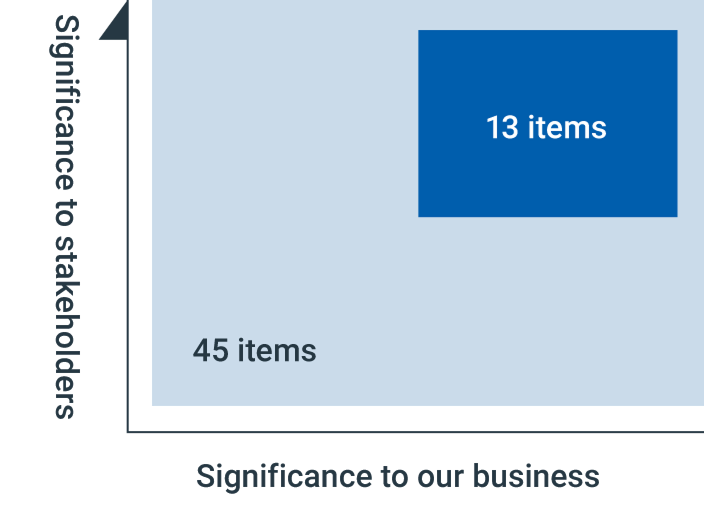
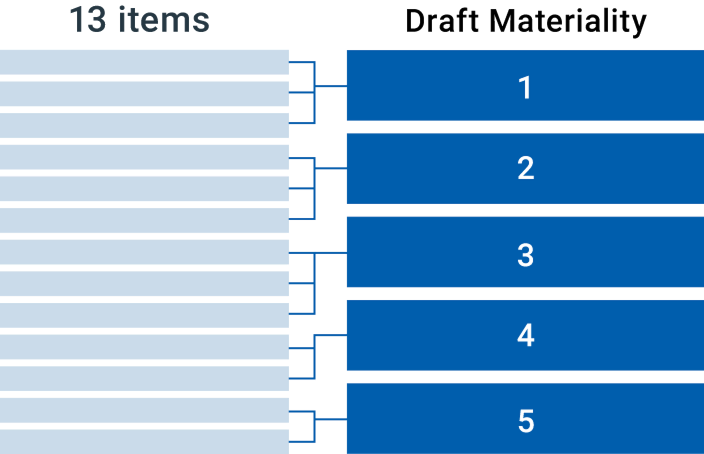
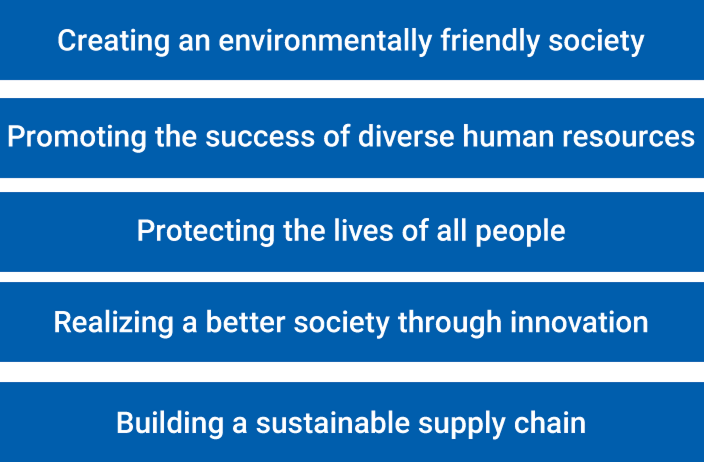
The Company identified priority issues to be addressed (materiality) with the participation of its employees and external experts. First, based on the evaluation items of international guidelines and ESG investment indexes, we identified social issues that have attracted widespread attention. Furthermore, through interviews with each business unit and surveys of other companies, we created a long list of 45 items, adding issues specific to our industry. Then we evaluated the items in terms of “importance to our stakeholders” and “importance to our business,” narrowing the list down to 13 items. The 13 items were then organized into five themes to formulate a materiality proposal. After ongoing discussions with external experts, the proposal was approved by the Board of Directors before being officially confirmed as the Company's materiality (see page 3 for Restar’s Materiality). Going forward, we will set KPIs and medium- to long-term targets, and accelerate efforts to achieve them.

In identifying our material issues, we first conducted an assessment to identify relevant social issues.
We compiled a long list of 45 issues by extracting social issues that are widely recognized based on international guidelines and ESG investment indices. In addition, we incorporated issues specific to our industry and company, drawing on interviews with each business division and the results of benchmarking surveys of peer companies.
The 45 identified social issues were evaluated from two perspectives: their importance to stakeholders and their importance to our business. Based on this assessment, the issues were prioritized.
As a result, 13 social issues were selected.
The 13 selected social issues were organized into five themes based on their characteristics, and a draft set of material issues was developed.
We validated the draft materiality and the process leading to the selection of the 13 related social issues through dialogue and exchanges of views with external experts.

The draft materiality and the 13 social issues were approved by the Board of Directors and formally identified as our materiality.
| Goals | Relevant Social Issues | Main Measures | KPIs (Action Metrics) |
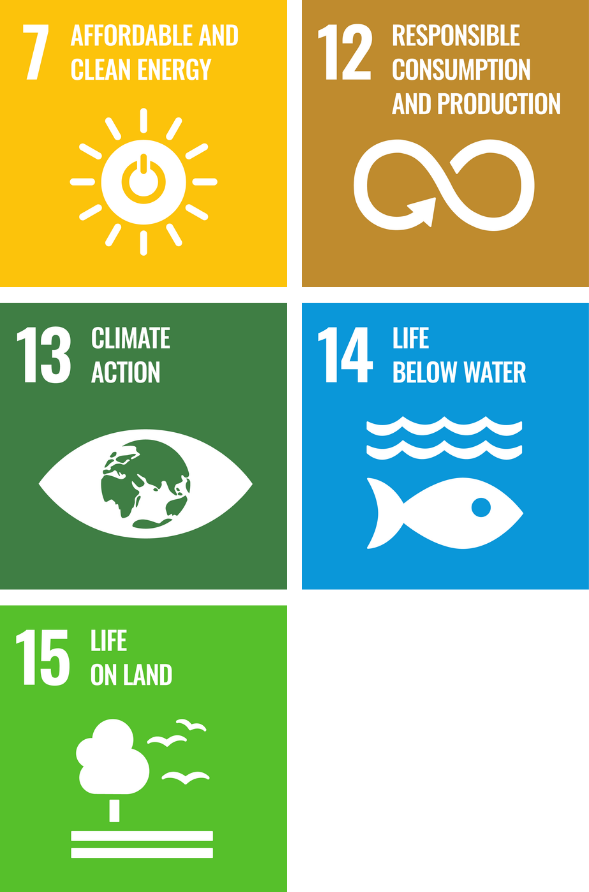
| Energy management | Promotion of renewable energy |
|
| Sustainable use of resources | Promotion of waste reduction and resource conservation through business activities |
| |
| Reduction of environmental impact through products and services | Provision of eco-friendly products and services | Expanding sales of eco-friendly products, power-saving semiconductors, event sensors, etc. |
| Goals | Relevant Social Issues | Main Measures | KPIs (Action Metrics) |
.png)
| Prohibition of discrimination and harassment | Implementation of discrimination and harassment training | Training participation rate: 100% (all employees are eligible) |
| Effective utilization of human capital | Creating an environment in which employees can thrive and play active roles | Employee awareness survey response rate: 90% or higher | |
| Promotion of diversity | Promotion of diversity initiatives (diversification of human resources and effective utilization of human capital) | Ratio of females in management positions: 10% in FY2030 |
| Goals | Relevant Social Issues | Main Measures | KPIs (Action Metrics) |
.png) | Contribution to local communities and culture | Promotion of regional revitalization based on IT and transparency to local governments (introduction of council system) | Number of deployments in local governments |
| Contribution to stable food supplies | Stable supply of safe and secure food | Vegetable factory sales |
| Goals | Relevant Social Issues | Main Measures | KPIs (Action Metrics) |
.png) | Realization of smart cities | Promotion of the development of advanced technologies and products that contribute to the realization of smart cities | Expansion of sales of businesses related to smart cities, municipalities, and commercial facilities (including IoT solutions and terminal businesses) |
| Creation of industrial infrastructure through technological innovation | |||
| Promotion of data security | Contribution to the realization of a safe and secure digital society by protecting information assets through security solutions | Cashless payments, access control, biometric authentication, and other security terminal markets: supply of such products (including data storage algorithms) |
| Goals | Relevant Social Issues | Main Measures | KPIs (Action Metrics) |
.png) | Enhancement of supply chain management | Improvement of productivity in procurement | Annual procurement transaction amount per person: up 20% in FY2025 (versus FY2022) |
| Risk management of major accidents |
|
|
Restar Group contributes continuous development all over the world by real involvement in SDGs activity.
Our aim is to create business opportunities while contributing to society by connecting SDGs implementation to actual business.
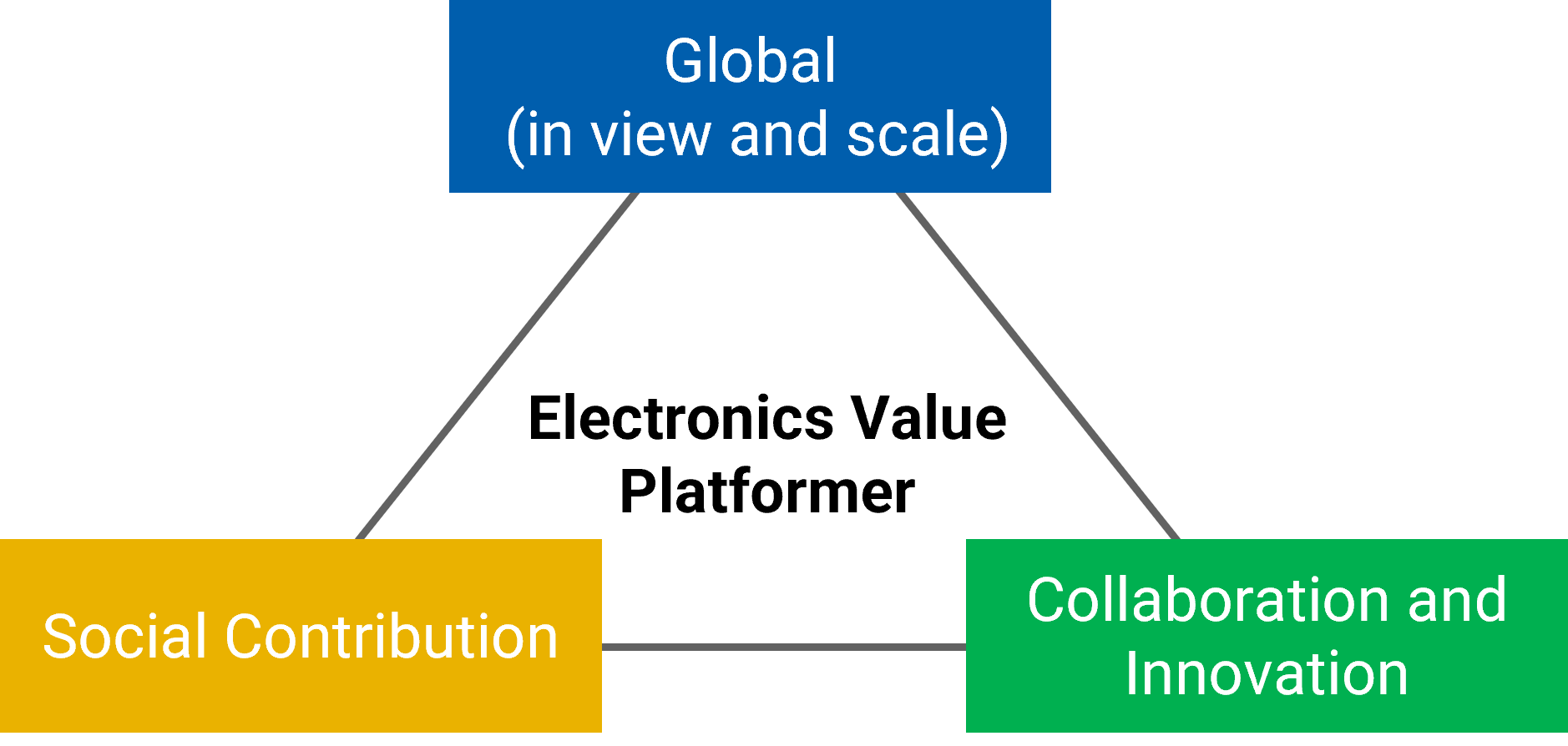
Value