As environmental problems such as climate change, depletion of natural resources, and loss of biodiversity become more serious, the need to take steps toward realizing a sustainable society has become an urgent global issue. In particular, the importance of decarbonizing corporate business activities and reducing environmental impacts throughout the supply chain is increasing, and governments and international organizations are tightening regulations and requiring companies to take action. The electronics industry has issues to address, such as the reduction of environmental impact, the use of renewable energy, and the promotion of the circular economy, all of which give consideration to the entire product lifecycle. As a company positioned at the core of the supply chain as an “Electronics Value Platformer,” Restar recognizes that addressing these global issues is an important task.
Based on this understanding, we set our basic philosophy as: “Recognizing that the conservation and improvement of the global environment is the most important issue common to all humankind in realizing a truly sustainable society, we will, as one of our management priorities, make effective use of limited resources in all aspects of our corporate activities and continuously improve our environmental performance, thereby contributing to the development of society and the preservation and improvement of the global environment.” Based on this philosophy, we have formulated the Action Guidelines as an approach to specific initiatives.
In our Code of Conduct, we set our basic approach: “As a member of society, we will actively address environmental issues through our business and CSR activities.” While generating synergies among our various businesses, we aim to contribute to the creation of a more prosperous and sustainable global environment by addressing regional development initiatives and helping to solve global environmental issues such as energy and food problems. To achieve these goals, every employee will comply with the Code of Conduct and work to resolve issues in cooperation with diverse stakeholders, including our business partners and local communities.
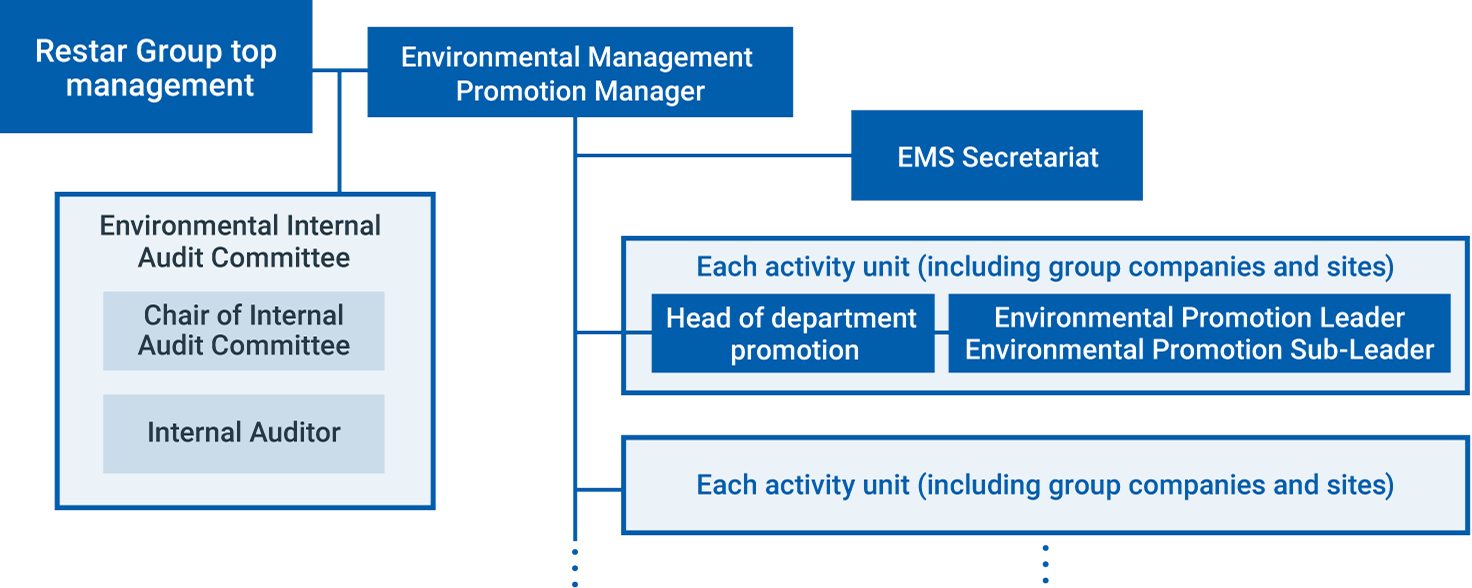
To put into practice our approach to environmental matters set forth in our Management Philosophy and Code of Conduct as well as in our Basic Sustainability Policy and Environmental Policy, we have established an Environmental Management System (the “EMS”) that complies with the ISO14001 standard. As of March 2025, we have obtained the Group ISO14001 certification*2 for 37 sites*1 of eight companies, including the Company and some domestic group companies. Under the direct control of our top management, the Environmental Management Promotion Committee, whose members are environmental promotion staff from each company and department, meets quarterly in principle to share the status of EMS activities and best practices across the organization and disseminates information on sustainability. In addition, internal audits (once a year) and management reviews (once a year and as needed) are conducted to confirm compliance with environment-related laws and regulations and the effectiveness of EMS as a whole. In the unlikely event of an external inquiry or emergency concerning the environment, we have a system in place that enables prompt decision-making and response through the Committee. Up to the current fiscal year, there have been no emergencies, violations of laws and regulations, fines, penalties, etc., that have had a significant impact on the environment.
| Certification standard | ISO14001:2015 |
| Certification body | SGS Japan Inc. |
| Certificate number | JP09/070622 (JAB), JP07/070088 (UKAS) |
| Initial registration date | January 10, 2007 |
| Validity period: | April 1, 2024 - March 26, 2027 |
| Group certification Group companies | Restar Embedded Solutions Corporation, Restar Device Corporation, PALTEK Corporation, Restar Solution Support Corporation, Kyoshin Communications Shikoku Co., Ltd., Vitec Vegetable Factory Co., Ltd. |
*1 Of the 41 sites of eight companies covered by the Group certification, 37 sites (90%) have been certified.
*2 Group companies included in the scope of certification of the Company (Restar Corporation), excluding group companies that have obtained certification on their own.
We regard the issue of climate change as one of the most important issues for sustainability management and are actively working to realize a sustainable society. Based on the recommendations of the Task Force on Climate-related Financial Disclosures (TCFD), an international framework, we have comprehensively identified the direct impacts of climate change on our business as well as indirect risks and opportunities through our customers and supply chain. We then qualitatively analyzed and assessed the degree of such impacts. In addition, we are also working to build a sustainable management system by strengthening initiatives based on our Environmental Policy, including the promotion of decarbonization and energy conservation activities. Going forward, we will develop specific action plans and activities to address the identified risks and opportunities, aiming to realize a sustainable society by further reducing and improving environmental impact.
| Risk classification | Key measures against risks | Estimated business and financial impact | ||
| 1.5°C and 2°C scenarios*3 | 4°C scenario*3 | |||
| Transition risks | Policies and regulations | Promoting initiatives to reduce CO2 emissions related to Scope 1 and 2 | Large | Medium |
| Markets | Improving procurement capacity for low-carbon products | Large | Medium | |
| Technology | Promoting development and strengthening sales of new technologies and eco-friendly products and services | Medium | Small | |
| Reputation | Reduce procurement costs by improving operational efficiency in digital transformation (DX) promotion, etc. | Large | Medium | |
| Physical risks | Acute | Strengthening supply chain management and improving responsiveness | Medium | Small |
| Chronic | Improving power generation efficiency | Medium | Small | |
| Classification of Opportunities | Main opportunities | Estimated business and financial impact | |
| 1.5°C and 2°C scenarios*3 | 4°C scenario*3 | ||
| Reputation | Growing market capitalization by being evaluated as an excellent company | Large | Medium |
| Resource efficiency | Expanding market opportunities associated with the increasing adoption of electrification, such as advanced driver-assistance systems (ADAS) and autonomous driving, etc. | Medium | Medium |
| Energy sources | Increasing opportunities to expand sales through assistance measures for renewable energy, etc. | Medium | Medium |
| Products and services | Expanding sales by providing energy-efficient (energy-saving, etc.) products and services, etc. | Medium | Medium |
| Resilience | Expanding sales of products and services through local infrastructure (e.g., smart cities) and disaster preparedness | Medium | Medium |
*3 The “1.5°C and 2°C scenarios” recommended by the TCFD are scenarios in which temperature increase is limited to within 1.5°C or 2°C above pre-industrial levels through greenhouse gas reductions based on the Paris Agreement. The “4°C scenario” represents a scenario in which climate change risks become more serious than they are now because no measures to counter global warming beyond the current situation are taken.
We are engaged in the renewable energy business, centering on mega solar power generation, to address the “environmental and energy issues” that are becoming increasingly important as a social challenge on a global scale, with the aim of realizing a decarbonized, sustainable decentralized society*4 that is resistant to disasters. We currently own 83 solar power plants in Japan and 94 solar power plants in Taiwan (as of March 2025), and plan to further expand the installation of solar power plants in the future. In 2023, the Company also began offering PPA (Power Purchase Agreement) services. We are committed to contributing to building a decarbonized society through the promotion of renewable energy to solve social issues in the global environment.
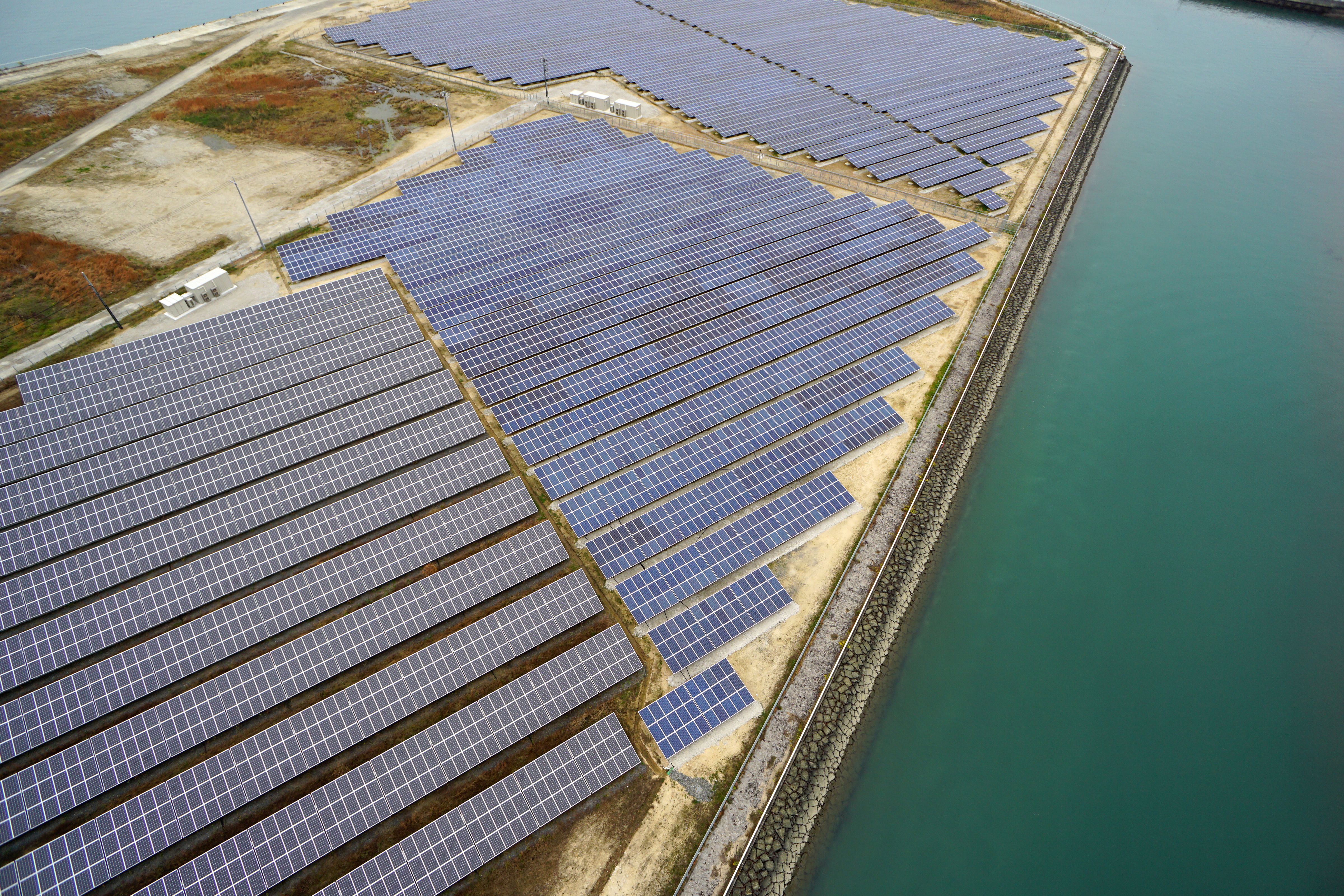
Ehime Yoshiumi Port No. 1 Solar Power Plant
*4 Decentralized society refers to a small-scale supply system (distributed power source) that is mainly based on renewable energy.
*5 This website is available in Japanese only.
V-Power CO., LTD., a group company which operates the integrated energy management business through power consulting, has implemented a carbon-free initiative using non-fossil fuel certificates*6 for games held at OPEN HOUSE ARENA OTA (a general sports stadium in Ota City, Gunma Prefecture), home of the Gunma Crane Thunders, a basketball team in the first division of the Japanese professional basketball B-League. As in this case, the Restar Group, including V-Power, will work together with its partner companies and local governments to accelerate decarbonization efforts, as well as to promote social development.
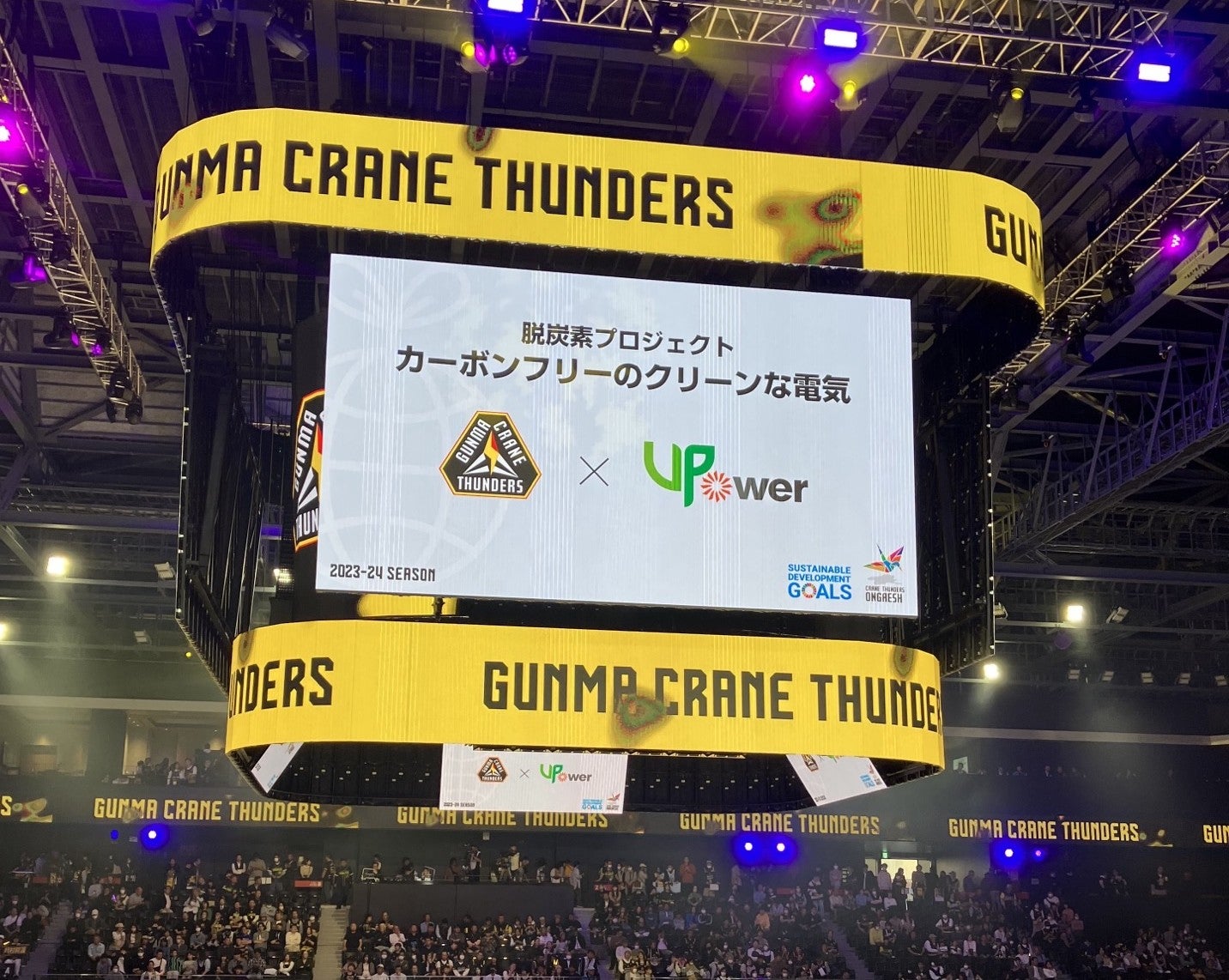
Carbon-free initiative at OPEN HOUSE ARENA OTA (a general sports stadium in Ota City)
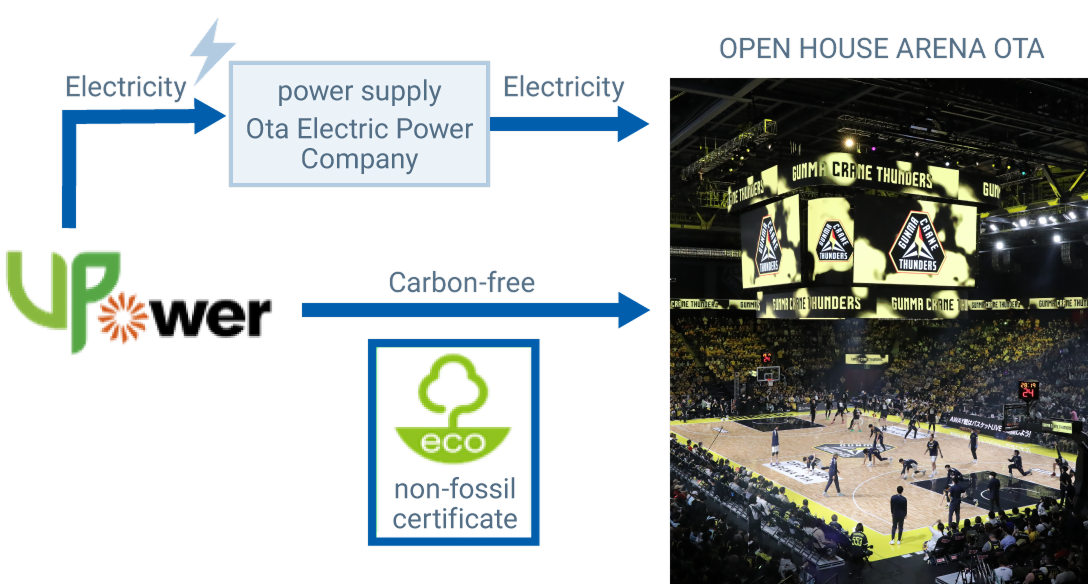
Illustrated image of carbon-free initiative by V-Power
*6 Non-fossil certificate is a certificate that represents the environmental value of electricity generated from non-fossil power sources.
*7 This website is available in Japanese only.
In February 2024, the Company installed its largest solar sharing power plant to date, with a capacity of 18 MW, in Hitoyoshi City, Kumamoto Prefecture. This project adopts a solar sharing model, also known as agrivoltaics, which combines agricultural use with solar power generation. From the autumn of the same year, we began cultivating nectar-producing plants and engaging in beekeeping by utilizing the space beneath the solar panels.
To date, the Company has accumulated expertise in solar sharing through the cultivation of crops such as shikimi, a type of evergreen tree native to Japan and sweet potatoes on idle farmland. Building on this experience, we aim to contribute to the conservation of local biodiversity and the creation of habitats for pollinating insects by introducing nectar-producing plants.
On-site operations are managed by our subsidiary, VITEC AGRI-POWER CO., LTD.
an agricultural production corporation qualified to own farmland, which is headquartered in Hitoyoshi City, Kumamoto Prefecture. The project is being promoted in cooperation with the local community.
Through this initiative, we seek to create multiple forms of value, not only by promoting decarbonization through the use of renewable energy, but also by restoring abandoned farmland, conserving ecosystems, and revitalizing the local economy.
Going forward, we will continue to work toward sustainable regional development by integrating the promotion of renewable energy, regional revitalization, and biodiversity conservation.
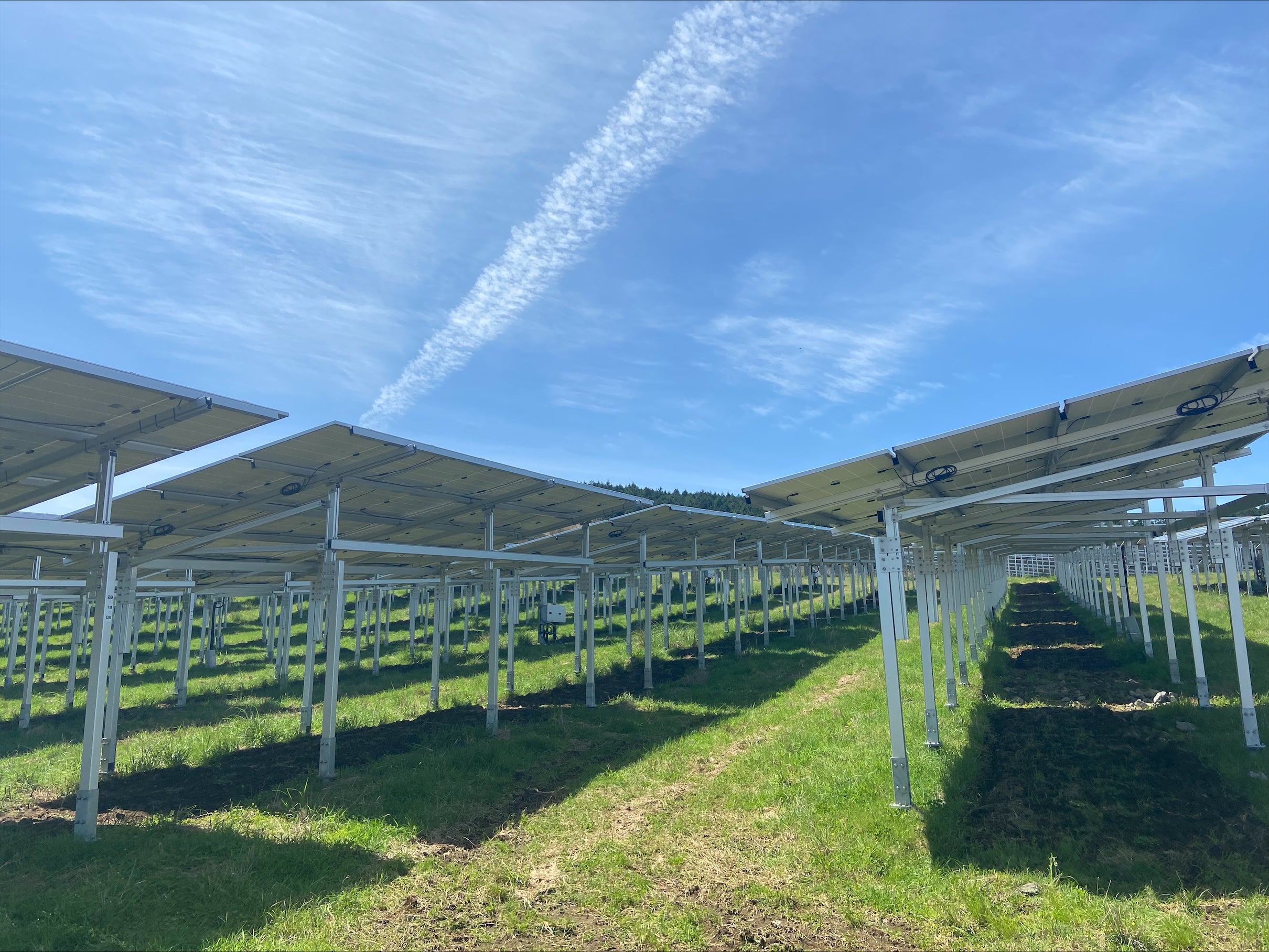
Solar panels and nectar-producing plants cultivated beneath the facilities (hairy vetch)
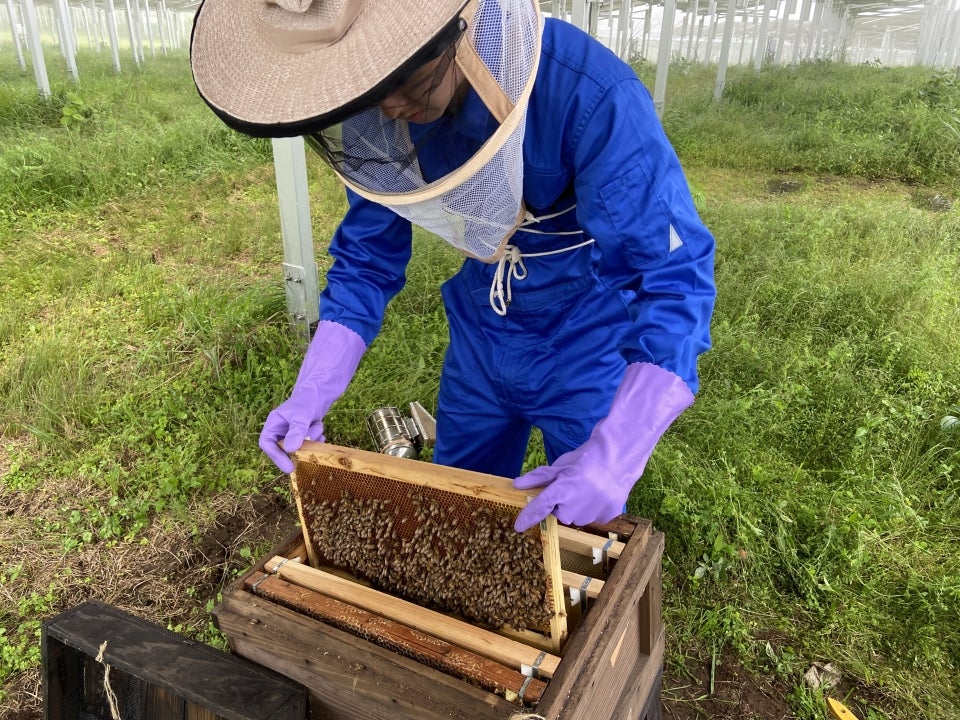
Beekeeping activities
In recent years, the rise in global water stress has become an issue. In this business environment, we are seriously aware of the importance of the issue, and we also aim to conserve water resources for the realization of a sustainable society. Currently, we are promoting the establishment of a management system to consider implementing more effective water resource conservation measures by visualizing company-wide use of water resources, and identifying and analyzing business sites with high water risk.
There have been no cases of noncompliance with any laws, regulations, or standards related to water quality or quantity and no penalties or such like.
With adherence to proper waste disposal in accordance with environmental laws and regulations being our basic stance, we also promote initiatives for the sustainable use of resources. In addition to promoting proper separation of waste in the office, the Company is using the environmental management system to manage targets in relation to its business activities, such as preventing and reducing waste loss by properly implementing sales and inventory management, and increasing paperless operations and operational efficiency through the promotion of computerization. We will continue our efforts to further reduce emissions and realize a recycling-oriented society through the 3Rs (Reuse, Reduce, Recycle).
Recognizing that further reducing the environmental impact of our business activities is an important issue, we promote activities that take pollution prevention into consideration. In particular, with regard to chemical substances contained in products, we comply with the RoHS Directive (European regulation that stands for Restriction of Hazardous Substances Directive) and REACH (European regulation on governing chemical substances: Registration, Evaluation, Authorization and Restriction of Chemicals) as well as other environmental laws and regulations in each country, and promote procurement activities in accordance with green procurement standards in cooperation with our business partners. In this way, we strive to reduce environmental impact throughout the supply chain. We will continue to strengthen our efforts to further mitigate environmental risks and build a management system that can flexibly respond to new laws, regulations, and industry standards.